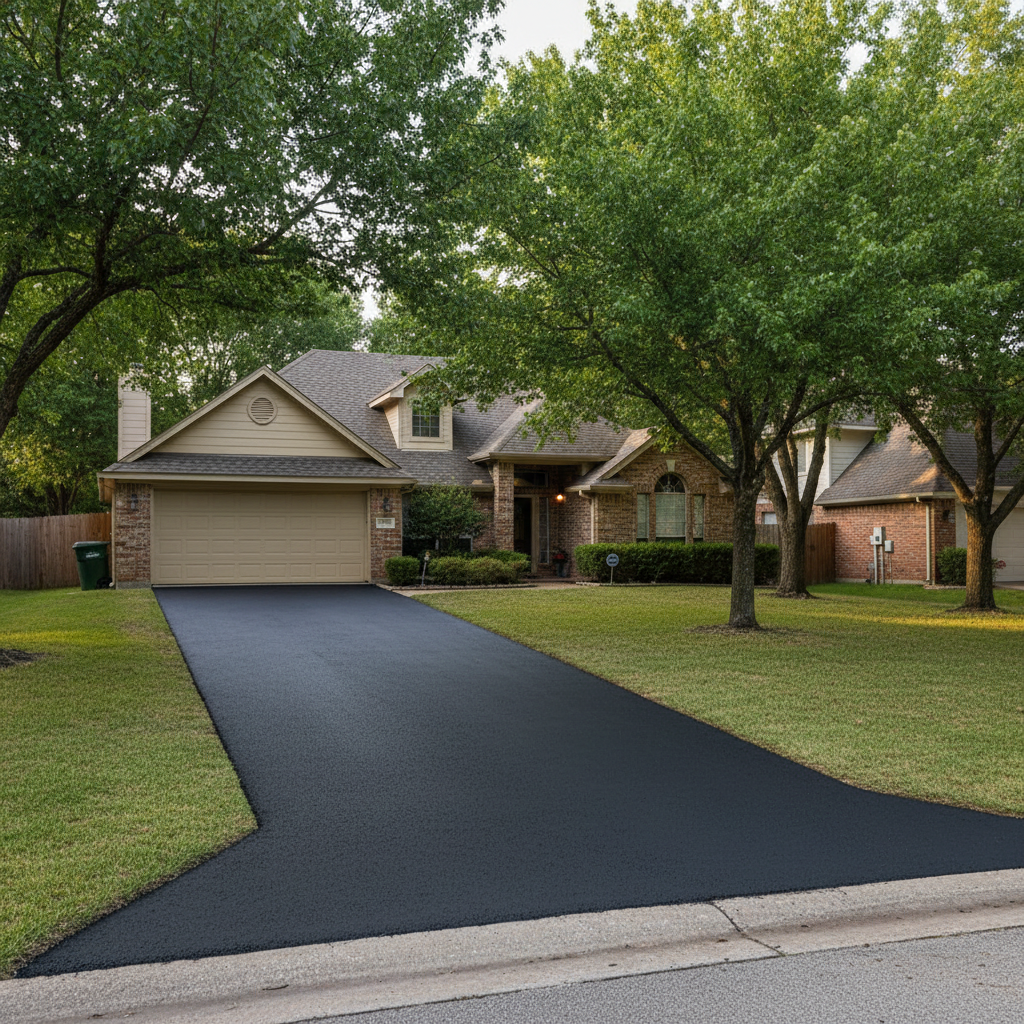
So, you're finally getting that new driveway in, or maybe you're just tired of those cracks staring at you every time you pull up. Good for you! But hold on a second. Before you jump headfirst into anything, let's chat about some common blunders I see Richardson homeowners make with their residential asphalt projects. You want a good, long-lasting job, right? So, let's make sure you don't end up wishing you'd done things differently.
Mistake #1: Always Picking the Lowest Bid
Look, I totally get wanting a good deal. Who doesn't? But with asphalt work, the cheapest quote is almost never the best. There's usually a pretty good reason why one bid is way lower than the others. It often means they're cutting corners somewhere. Maybe they're skimping on material, using thinner layers, or going with cheaper aggregate. Or, and this is a big one, they might not be prepping the sub-base properly – and that's absolutely vital for our expansive clay soils here in North Texas. You might save a few hundred bucks upfront, sure, but you'll likely be paying for repairs or even a full redo much sooner than you should. Always compare apples to apples, and if a bid seems too good to be true, well, it probably is.
Mistake #2: Not Asking About the Sub-Base
This one's a real killer, especially around here. Our soil in Richardson, just like much of DFW, is mostly clay. It swells up when it's wet and shrinks when it dries out. If your contractor doesn't properly prepare and stabilize the sub-base – that's the compacted stuff under the asphalt – your driveway will crack and shift way too fast. I've actually seen driveways less than a year old that looked like a jigsaw puzzle because the contractor just paved right over poorly compacted dirt. Ask them about their sub-base preparation process. What kind of material do they use? How do they compact it? A good contractor won't mind explaining; in fact, they'll probably be proud to tell you how they make sure you've got a rock-solid foundation.
Mistake #3: Ignoring References and Reviews
It’s super easy to just grab the phone and call the first number you see, but you really need to do your homework first. Check online reviews, definitely, but don't stop there. Ask for references, and then actually call them. Ask about the contractor's communication, how timely they were, and if they stood by their work. Did they clean up properly? Were there any hidden costs? A reputable company like Richardson Accurate Asphalt will have no problem giving you a list of happy customers. If a contractor hems and haws when you ask for references, that's a huge red flag, wouldn't you say?
Mistake #4: Not Understanding the Scope of Work
Before anyone even starts, you need a crystal-clear idea of what's actually being done. Is it just a top coat? Are they ripping out the old asphalt? How thick will the new asphalt be? And what about drainage? You'd be surprised how many homeowners just assume things that aren't explicitly written in the contract. Get absolutely everything in writing. If they say they'll do 'X', make sure 'X' is on the paper. This protects both you and the contractor and stops misunderstandings down the line. Don't be shy about asking questions until every single detail makes sense to you.
Mistake #5: Forgetting About Drainage
Water is asphalt's arch-nemesis. If your new driveway doesn't have proper drainage, you're going to end up with standing water, which then leads to cracks, potholes, and it'll just fall apart too soon. This is especially true for homes in places like Canyon Creek, where some older driveways might not have been designed for the heavy rains we get these days. A good contractor will check your property's slope and make sure the asphalt is angled correctly to push water away from your house and off the driveway. If they don't bring up drainage, you absolutely should. It's not just about the asphalt itself; it's about how it works with everything around it.
Mistake #6: Skipping the Contract
This might seem like a no-brainer, but some folks still just go with a handshake. Never, ever do that. A written contract protects everyone involved. It should spell out the work, the materials they'll use, how thick the layers will be, start and end dates, the payment schedule, and any warranties. If a contractor seems hesitant to put everything in writing, just walk away. You need that paper trail in case anything goes sideways.
Look, getting a new driveway or fixing an old one is a big investment in your home. Take the time to do it right, ask those tough questions, and pick a contractor who truly cares about quality and being upfront with you. You'll be so glad you did when your driveway still looks great and holds up for years down the road.